Amazonian mushroom reveals its true identity through scientific research and historical documentation
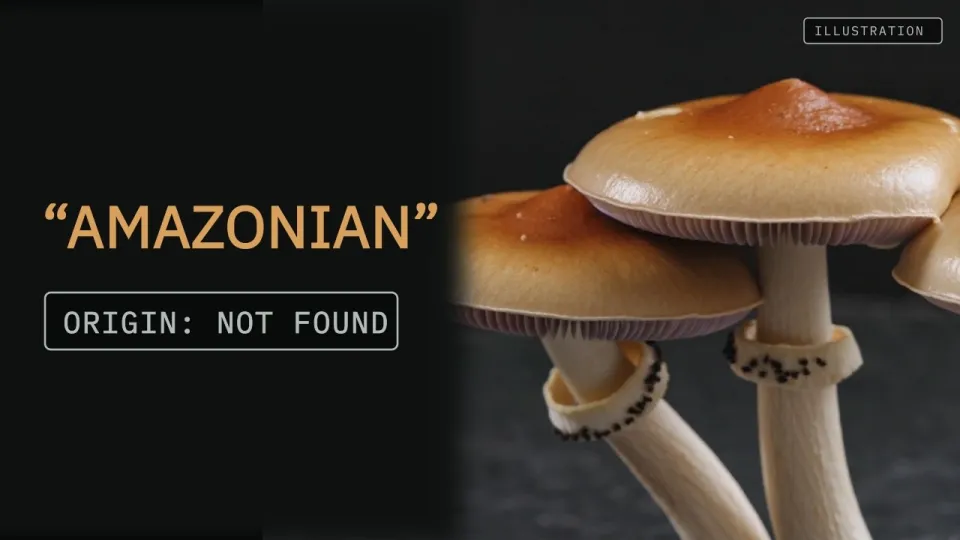
· based on the channel Shroomverse
The Amazonian mushroom has often been a subject of confusion and mystery due to its name and classification. The true identity of the Amazonian mushroom was clarified by following a detailed paper trail of scientific research and historical records that tracked the naming and classification processes. This approach revealed how the mushroom’s identity relates to specific Amazonian species and resolved taxonomical ambiguities.
Tracing the Amazonian mushroom name through scientific literature
The first step in understanding the Amazonian mushroom involved examining the original scientific papers that referenced the name. Researchers noted that the term “Amazonian mushroom” was used informally before being linked to precise species descriptions in botanical and mycological publications. Early references came from explorations in the Amazon rainforest documenting various fungi, but the exact species remained unclear until taxonomical revisions surfaced in later studies 02:15.
Taxonomy and classification challenges
Taxonomical classification of the Amazonian mushroom faced challenges due to morphological similarities with other tropical fungi. Mycologists used traditional characteristics such as spore structure, cap shape, and habitat to differentiate species. However, these features often overlapped between species, causing misidentifications. The paper trail showed that multiple reclassifications occurred as new evidence emerged, particularly with the aid of molecular techniques 05:40.
Molecular studies and DNA sequencing insights
Molecular biology played a crucial role in confirming the Amazonian mushroom’s identity. DNA sequencing of specimens collected in the Amazon rainforest provided genetic markers that distinguished this mushroom from related species. These genetic insights complemented earlier morphological studies, leading to a more stable classification and a clearer understanding of the mushroom’s evolutionary history 07:20.
Historical documentation and ethnomycological context
Historical accounts and ethnomycological studies added depth to the understanding of the Amazonian mushroom. Indigenous knowledge and early botanical records highlighted the mushroom's local names, uses, and significance in traditional practices. This information helped researchers correlate scientific names with cultural references, enriching the mushroom’s identity beyond taxonomy 10:05.
The significance of following the paper trail
Following the paper trail behind the Amazonian mushroom’s name illustrates how scientific progress and historical research converge to clarify species identity. It underscores the importance of combining morphological, molecular, and cultural data to resolve taxonomical complexities. The story of the Amazonian mushroom demonstrates the evolving nature of mycological classification and the value of thorough documentation in scientific discovery 12:30.
Conclusion
The Amazonian mushroom’s identity was unveiled by tracing the scientific and historical documentation related to its name and classification. Integrating molecular studies with traditional taxonomy and ethnomycological knowledge resolved long-standing ambiguities. This comprehensive approach highlights the dynamic process of species identification in mycology. The detailed analysis by Shroomverse provides an exemplary case of how following the paper trail can illuminate the true nature of a species.
Key takeaways
- Amazonian mushroom’s name origin traced through multiple scientific papers
- The mushroom is linked to specific species native to the Amazon rainforest
- Historical documentation helped clarify taxonomical confusion
- Molecular studies complemented traditional taxonomy in identification
- Shroomverse video details the paper trail behind the mushroom’s naming
Questions & answers
What is the Amazonian mushroom?
The Amazonian mushroom refers to fungal species native to the Amazon rainforest, identified and classified through scientific research and historical documentation.
Why was the Amazonian mushroom’s identity unclear?
Its identity was unclear due to overlapping morphological features with other tropical fungi and inconsistent naming in early literature.
How did molecular studies help in identifying the Amazonian mushroom?
DNA sequencing provided genetic markers that clarified its distinction from similar species, complementing traditional taxonomy.
What role did historical and ethnomycological data play?
They helped connect scientific classification with indigenous knowledge and cultural significance, enriching the understanding of the mushroom.
Source: Amazonian Mushroom: Following the Paper Trail Behind the Name · Markdown version